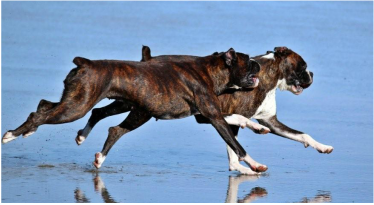
Age of onset of Boxer JKD
It is important to note that there is increasing evidence to suggest that Boxer JKD is not limited to young puppies. The term Juvenile Kidney Disease (BoxerJKD) or “juvenile renal dysplasia” has been used to describe this form of inherited kidney disease for many years. The mislabeling of renal dysplasia as a 'juvenile' condition has resulted in confusion about the disease, and many breeders have assumed that the problem does not exist in their kennel. The age of onset can be highly variable. Kidney failure from this developmental condition can occur at any age. In fact many more adults may die from Boxer JKD than young puppies. Ultimately, this disease will shorten the life of many adults.
The age of onset is variable but the disease is most frequently diagnosed in dogs under the age of 3, and often much earlier than this, as in 'young’ puppies before the age of 12 months. But in many cases onset of symptoms can occur in dogs over the age of 3 years. Early diagnosis of the disease is beneficial for managing the symptoms and slowing the progression of the disease thereby increasing the lifespan and the quality of life for the dog.
Pregnancy and the after effects of having a litter may also be a factor that triggers the onset of symptoms and the detection of Boxer JKD in older bitches. The incidence of Boxer JKD in bitches maybe tenfold higher compared to that of males. On the other hand, affected Boxer JKD males may remain 'sub clinical' and be missed completely as they will live an apparently normal healthy life.
Dogs with unilateral kidney disease (where only one kidney is developmentally abnormal) may or may not ever show signs of kidney disease or failure, depending upon the functional health of the other kidney.
While Boxer JKD is typically diagnosed in animals under 3 years old, late onset cases may erroneously be attributed to other causes. We have identified many cases of late onset kidney disease in the Boxer JKD family groups studied.
Many ‘hidden’ (sub clinical) Boxer JKD cases will remain normal throughout the whole of their lives. It is important to realise the consequence of breeding from 'sub clinical' animals.
The age of onset is variable but the disease is most frequently diagnosed in dogs under the age of 3, and often much earlier than this, as in 'young’ puppies before the age of 12 months. But in many cases onset of symptoms can occur in dogs over the age of 3 years. Early diagnosis of the disease is beneficial for managing the symptoms and slowing the progression of the disease thereby increasing the lifespan and the quality of life for the dog.
Pregnancy and the after effects of having a litter may also be a factor that triggers the onset of symptoms and the detection of Boxer JKD in older bitches. The incidence of Boxer JKD in bitches maybe tenfold higher compared to that of males. On the other hand, affected Boxer JKD males may remain 'sub clinical' and be missed completely as they will live an apparently normal healthy life.
Dogs with unilateral kidney disease (where only one kidney is developmentally abnormal) may or may not ever show signs of kidney disease or failure, depending upon the functional health of the other kidney.
While Boxer JKD is typically diagnosed in animals under 3 years old, late onset cases may erroneously be attributed to other causes. We have identified many cases of late onset kidney disease in the Boxer JKD family groups studied.
Many ‘hidden’ (sub clinical) Boxer JKD cases will remain normal throughout the whole of their lives. It is important to realise the consequence of breeding from 'sub clinical' animals.
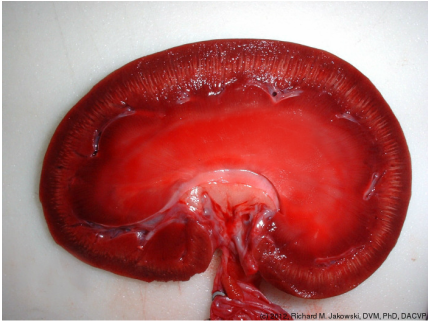
Normal Canine Kidney
|
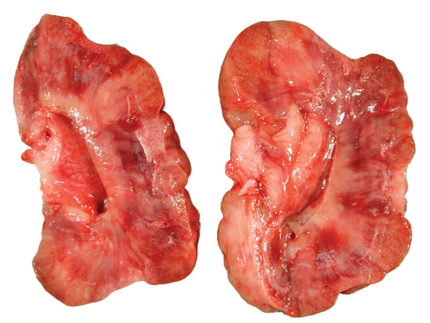
BoxerJKD kidneys
|